Best PCIT Toys for Strong Parent-Child Bonds
Written by PCIT Coordinator and Therapist, Courtney Chamerski, LCSW
Parent-Child Interaction Therapy (PCIT) blends research-backed strategies with play to help families strengthen connection, reduce conflict, and build emotional regulation skills. At the heart of PCIT is Child-Directed Interaction (CDI), letting your child lead play while you follow along using the PRIDE skills (a set of special skills we teach in PCIT!). When play is hands-on, open-ended, and creative, it naturally invites meaningful interaction and connection while encouraging more helpful behaviors.
Toys play an important role in this process (what kid doesn’t love toys!). We don’t just use any toys in PCIT, we focus on toys that will best facilitate play and keep it going, so you can focus on the connection and not conflict.
What Kinds of Toys Does PCIT Use and Why?
It might seem like PCIT is all toys and playing. More accurately, this CDI portion of the therapy is all about creating opportunities for interaction in which parents can use their newfound PRIDE skills in real time.
PCIT toys tend to share a few important characteristics. They are open-ended, hands-on, and imagination-based, meaning there is no single “right” way to play. These toys allow children to be in charge of the activity while parents join in without directing, correcting, or teaching. This setup makes it easier for parents to describe what their child is doing, reflect their words, imitate their actions, and offer labeled praise, all core components of PRIDE skills.
Hands-on and creative toys also naturally slow play down. Instead of fast-paced or rule-based activities, PCIT toys invite exploration, problem-solving, and shared attention. This creates space for warm interactions, positive language, and genuine enjoyment. When a child feels seen and followed in play, their confidence grows, and challenging behaviors often decrease as connection increases.
These kinds of toys help you follow the child’s lead, reflect their ideas back to them, praise specific actions, and truly enjoy the moment together.
Top PCIT Toys for Home Play
Here’s a focused list of toys that work beautifully in PCIT sessions, at home, in therapy rooms, or anytime you want connection-focused play.
🎨 Creative & Building Toys
These toys spark imagination and support extended play, making them perfect for PRIDE skill practice:
Legos, Duplos, Tinker Toys, and K’Nex: Build together, label actions, and reflect ideas.
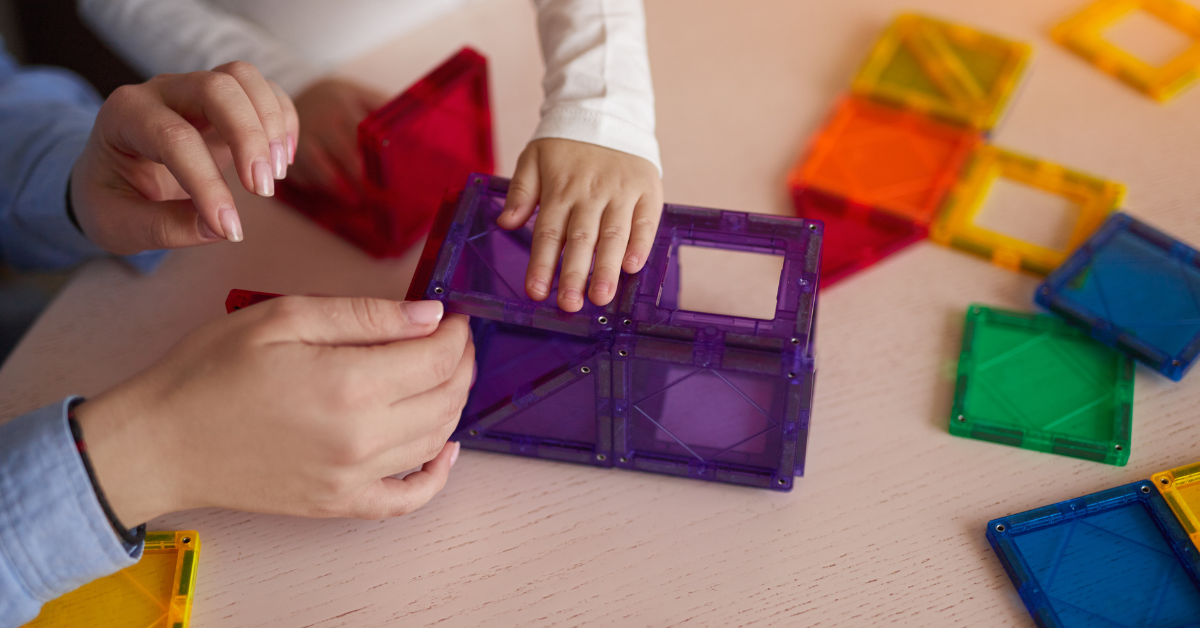
Magnetic Blocks: Easy for toddlers and older kids to build and narrate.
Lincoln Logs and gear sets: Open-ended construction encourages shared projects.
These toys let your child create worlds while you comment, imitate, and enjoy their leadership. Building toys are ideal for describing actions (“You’re stacking the blue block on top”), imitation (“I’m building one just like yours”), and praise (“You stayed so focused on that tower!”).
🧸 Pretend Play & Figurines
Pretend play supports language, storytelling, and collaboration:
The Potato Head Family: Funny, unexpected play that invites describing and laughing together.
Baby dolls, dollhouses, small plastic animals, or farm sets: Worlds to explore side by side.
Play kitchens and play food sets (one of our personal favorites!): Endless scenarios to describe and engage.
This category is rich with opportunities for conversation, reflection, and shared delight.
✍️ Creative Expression
Arts and tactile tools are excellent for shared focus:
Play-Dough or modeling clay: Squeeze, roll, and shape while talking about what you’re making.
Crayons and paper: Draw together, describe each drawing, and reflect likes and choices.
Train sets and cars: Great for narration, imitation, and playful cooperation.
Creative toys offer endless opportunities to narrate, praise effort, and enjoy being side by side without pressure or rules.
🚘 On-the-go
Connection doesn’t stop when you leave the house. These compact toy ideas are easy to pack and keep play open-ended and engaging, allowing you to practice PCIT skills anywhere:
Writing tablets: Draw together and take turns describing each other’s creations.
Snap-bead jewelry kits: Fine-motor play that lets you praise choices and reflect ideas.
Crayons and drawing paper: Classic creativity that invites collaboration.
These portable toys help you stay connected during transitions, travel, or waiting times, turning everyday moments into small PCIT play opportunities.
Toys to Avoid During PCIT
Not all toys support connection-focused play. This doesn’t mean these toys are “bad” or “unfun”; rather, they make it harder to stay in a PRIDE-focused mindset. During PCIT, it’s best to avoid toys that require frequent limit setting, encourage aggression, or shift play toward competition or instruction.
❌ Toys that encourage rough or aggressive play (for example, bats or boxing gloves)
❌ Toys that could harm or encourage hitting (toy guns, swords, or some action figures)
❌ Toys that require limit setting or get out of hand (paints, bubbles, or paper airplanes)
❌ Toys with pre-set rules or competition (board games or card games)
❌ Passive entertainment or toys that discourage dialogue (video games, watching movies, or books used alone)
These toys can unintentionally shift focus from supportive interaction to rule enforcement, which is the opposite of what PCIT play is designed to do.
Play Together, Grow Together
Choosing the right toys makes PCIT play feel joyful, natural, and rich with opportunities to use PRIDE skills wherever you are. Whether you’re building a tower, shaping play-dough, or coloring side by side on a tablet, these moments are invitations to connect, listen, reflect, and enjoy your child’s world. The list of toys is limitless, but for helpful suggestions, PCIT International offers a list of PCIT-approved toys.
If you want help getting started with PCIT or choosing toys that fit your home and family routines, reach out to Mind Chicago. We’re here to support your journey toward deeper connection and joy.
Not yet started with PCIT? Contact us today!